How to Decide Whether to Restore an Antique Clawfoot Tub
How to decide whether to restore an antique clawfoot tub: You should restore an antique clawfoot tub only when the damage, finish, or missing parts make…
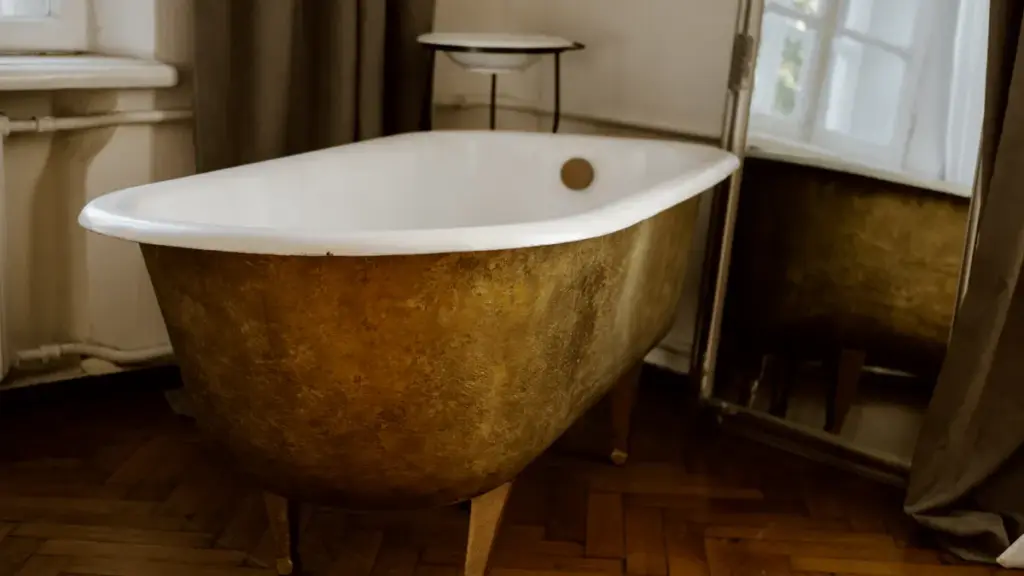
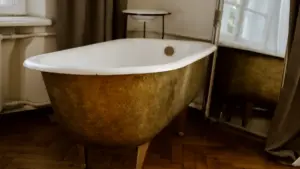
antique clawfoot bathtub with worn brass-colored exterior
Last updated: November 13, 2026
Quick Answer
You should restore an antique clawfoot tub only when the damage, finish, or missing parts make restoration more useful than preservation. In practical terms, a tub with solid cast iron, limited enamel loss, and original hardware often deserves conservation first, while a tub with deep rust, active leaks, or failed coatings often needs more work.
This guide explains How to decide whether to restore an antique clawfoot tub by weighing historic value, collector value, original hardware, and daily use before you spend a dollar.
Key Takeaways
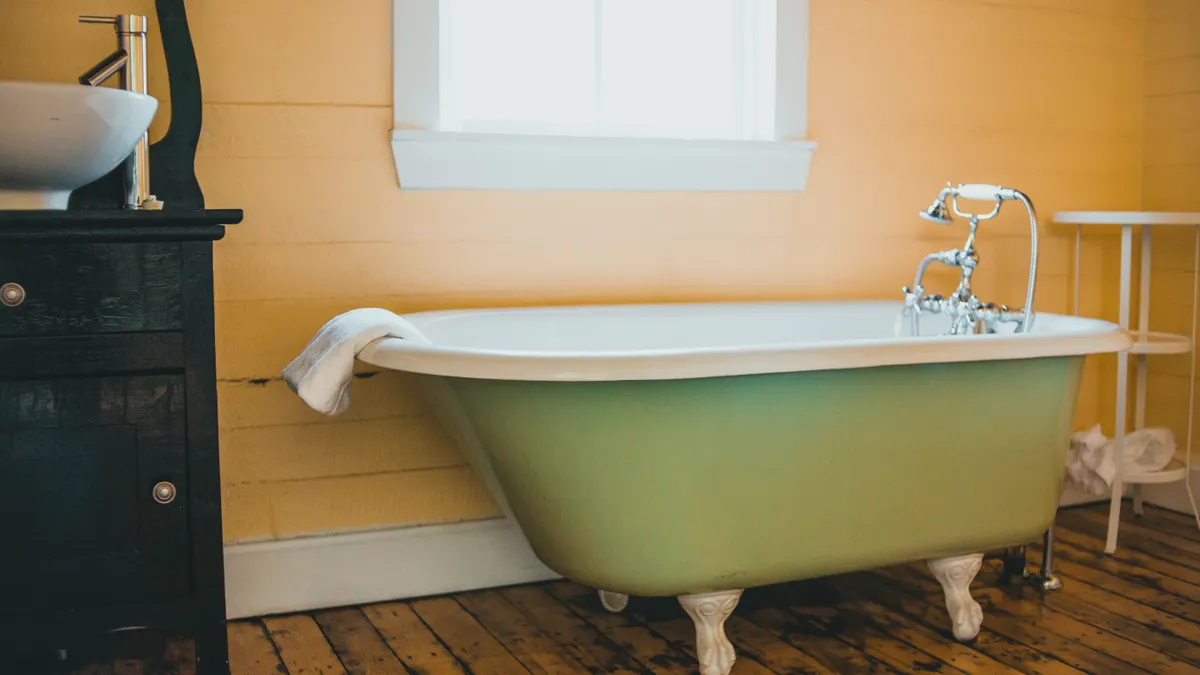
- A tub with solid cast iron and decent enamel often deserves conservation first.
- Deep rust, active leaks, or a failed lining can push the decision toward full restoration.
- Original feet, valves, and drain parts can matter as much as the porcelain surface.
- A tub with real collector value can lose appeal if too much original material gets stripped away.
- If you want daily bathing, the best choice is not always the most museum-correct one.
What is the tub trying to be: fixture, heirloom, or display piece?
Picture this: you’re standing in a bathroom with a tub that has rolled rims, lion’s paw feet, and a surface that still catches light at the right angle. The real question is what role it should play in your home, because that answer changes everything.
If the tub is meant for daily use, restoration can be worth more than perfect originality. If it is a historical home piece or a display object, keeping original surface and parts may matter more than making it look new. A tub that once belonged to a period house can carry more value as an honest survivor than as a heavily altered remake.
To decide whether to restore an antique clawfoot tub, ask three questions:
- Do you want to bathe in it, or mostly look at it?
- Does the tub still have original hardware and feet?
- Would a glossy refinish help the room, or erase the tub’s character?
Use those answers to set the goal before you call anything “restoration.”
That word can mean very different things.
- Use-first goal: fix leaks, stabilize the surface, and make it safe for bathing.
- Preservation-first goal: clean, repair, and keep as much original finish as possible.
- Display-first goal: protect the tub’s age, shape, and details even if it stays out of service.
A tub with strong collector value usually leans toward preservation. A tired tub in a family bathroom often leans toward functional restoration. The wrong choice is forcing a museum approach onto a tub that needs to work every day.
Is the enamel still worth saving?
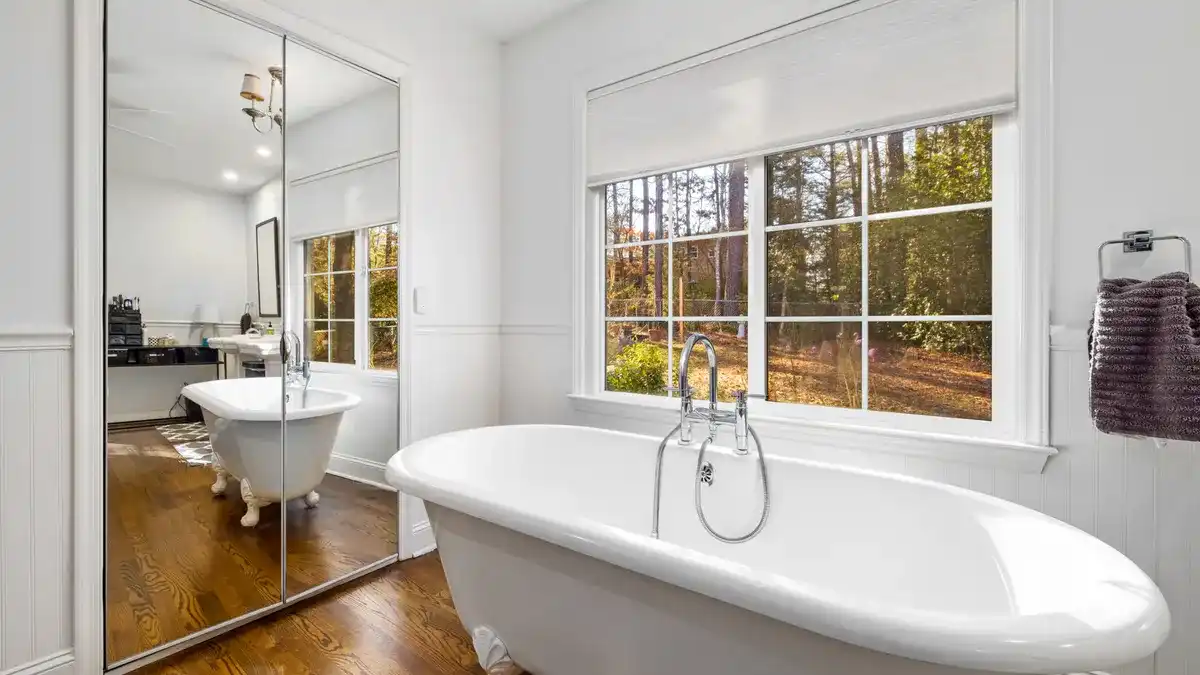
The enamel is worth saving when the damage is shallow, the wear is mostly cosmetic, and the cast iron underneath is still stable. Once the surface has widespread loss, deep staining, or long rust runs, the balance shifts.
Picture yourself kneeling beside the tub with a flashlight, checking the basin, rim, and overflow. You’re not looking for “perfect.” You’re looking for signs that tell you whether the surface still has enough life for finish preservation.
Look for these clues:
- Small chips at the edge, not broad missing fields
- Hairline cracks in the finish without visible flex in the iron
- Localized rust near a drain or foot, not rust bleeding across large areas
- A surface that cleans up without turning chalky or rough
Now look for the hard stop signals:
- Large exposed iron patches
- Soft spots, flaking, or bubbling under the finish
- Rust that keeps returning after cleaning
- Surface wear so deep that the tub feels rough in use
Here’s the catch: a surface can look “tired” and still be salvageable, while a tub that looks shiny can have hidden problems under old coatings or patch work. That is why a quick visual check is not enough.
- Good candidate for preservation: wear is limited, the body is sound, and the tub still has a credible period surface.
- Candidate for restoration: the finish is failing, but the tub still has solid structure.
- Poor candidate for cosmetic saving: the surface is so far gone that patches would be larger than the original finish left.
If the tub’s finish is part of what makes it special, consult a professional before any strip-and-refinish decision, because that choice is usually permanent. Once that original enamel is gone, it does not come back.
What original parts should make you stop and think?
Original parts should make you pause because they change both the look and the value of an antique tub. A replacement faucet, new drain, or swapped feet can be fine for use, but each change pulls the tub farther from its original state.
Because the original parts matter, start by looking at the feet, drain, and faucet set before you decide how far to go. Picture a tub with heavy claw feet, an old-style waste and overflow, and a faucet set that still fits the period of the house. That combination is not just decoration. It is evidence. Collectors, preservation-minded buyers, and old-house owners often care about those details more than a flawless new finish.
Check for these parts before deciding:
- Feet: Are they original to the tub, and are all four present?
- Drain assembly: Is the waste and overflow period-correct or a later substitute?
- Faucet holes: Have they been altered, widened, or patched?
- Mounting points: Do they show fresh drilling, filler, or welded repairs?
A tub with intact original hardware often deserves a lighter touch. If the feet are cast to match the tub and the drain parts still fit the era, replacing them for cosmetic reasons can be a mistake. The tub may look “cleaner,” but it can lose the very details that make it an antique tub.
A few trade-offs are real:
- Keeping an old drain may preserve character, but it can be fussy to maintain.
- Swapping in modern parts can improve function, but it may hurt collector interest.
- Repainting original feet can tidy the look, but it can also hide marks and casting detail.
On the other hand, missing or badly corroded parts can support restoration. If the tub has already lost key pieces, a careful rebuild may recover more usefulness than value would be lost. The decision changes when the original parts are gone versus when they are merely worn.
How do I judge historic and collector value before restoring?
You judge historic value and collector value by asking how much original material is left, how rare the tub is, and how much alteration it has already seen. A tub with age alone is not automatically worth preserving in place; a tub with rare features and intact detail usually is.
Picture a clawfoot tub in a house built around 1900. It may be a common model, or it may have unusual feet, a distinctive rim, or a maker’s mark hidden near the overflow. Those details matter more than a general impression of “old.”
Use this simple decision path:
- Identify the body condition. If the iron is solid and the surface is mostly intact, the tub has a better case for conservation.
- Look for maker clues. Marks, unusual feet, and period-correct fittings can support collector interest.
- Count the changes. Modern plumbing, patch work, and new coatings lower originality.
- Compare the tub to the house. A tub that fits a preserved historical home has more context value than one stranded in a newer remodel.
- Decide the end use. Bathing use rewards function; display use rewards originality.
A tub can have sentimental value without having strong collector value. That distinction matters. Family history may justify restoration even when resale value would not.
You do not need a formal appraisal to make a smart first call. You only need to be honest about what survives. If the tub is mostly original and the finish is still telling its age, heavy refinishing can be the wrong move. If the tub has already been altered in several places, a practical restoration can make more sense.
For readers who want the broader process, the main clawfoot tub restoration guide on this site is the next place to look after this decision is settled. It gives the next step without repeating the judgment call.
What does restoration actually change?
Restoration changes the tub’s surface, structure, and future maintenance, and that means the work can either protect value or erase it. The outcome depends on how far the work goes and which parts stay untouched.
Because restoration can go in two directions, picture the common fork in the road: one option keeps the old enamel and repairs only what is failing, while the other strips, re-coats, and replaces more of the visible history. Both can make the tub useful. They do not preserve the same thing.
A practical restoration path usually aims to do the following:
- Repair rust before it spreads through the iron
- Stabilize chips and weak spots
- Replace failed drain or overflow parts only when needed
- Refresh the finish enough for cleaning and bathing
- Keep feet, rims, and decorative details as original as possible
That sounds tidy, but there are trade-offs.
A lighter restoration may keep more of the tub’s character, yet it can leave stains, wear, or uneven sheen. A fuller restoration can make the tub easier to use, yet it may reduce collector appeal if it wipes out too much original finish. A tub with a lot of visible age may still look better with honest conservation than with a glossy redo.
Be careful with these common mistakes:
- Stripping too early: you lose original finish that may have been salvageable.
- Replacing original parts for looks: you trade authenticity for polish.
- Chasing a modern showroom finish: the tub can stop looking antique at all.
- Ignoring hidden corrosion: cosmetic work fails if the iron keeps rusting underneath.
A better question than “Can this tub be made new?” is “What is worth saving on this tub?” That question usually produces the right line between repair and overwork.
If the tub is rare, strongly period-correct, or tied to a historic house, less is often more. If it is heavily damaged and meant for daily bathing, a more complete restoration can be the sensible call.
When is conservation better than restoration?
Conservation is better than restoration when the tub’s original material still survives and the main goal is to protect what is already there. If the finish is stable, the hardware is largely original, and the tub is not failing in use, conservation usually wins.
Because stabilization comes first, picture yourself choosing between sanding away history and carefully preserving it. That is the real decision. A conservation-minded approach focuses on cleaning, stabilization, and small repairs instead of full resurfacing.
Conservation makes the most sense when:
- The enamel is worn but not breaking apart
- The feet, drain, and visible fittings are original or near-original
- The tub has strong historic value
- The room is designed around period accuracy
- You care more about authenticity than a like-new look
Restoration makes more sense when:
- The tub leaks or has active structural problems
- Rust is spreading fast
- The surface is so damaged it no longer functions well
- The tub is missing major parts
- The tub needs to serve as a daily fixture, not a showpiece
There is no shame in choosing the middle path. Many owners think in extremes: either leave it untouched or redo everything. That is a mistake. A tub can be stabilized, cleaned, and made usable without turning it into a replica.
One useful rule: if the tub still tells the truth about its age, protect that truth. If it has already lost too much of that story through damage or past repairs, restoration may be the better rescue.
The decision checklist for an antique clawfoot tub
You decide to restore an antique clawfoot tub when structure, use, and lost function outweigh the value of what remains original. You decide not to when the tub’s surface, parts, and story still matter more than a fresh finish.
Because the final call comes down to a few concrete checks, picture the final pass before you commit. You have the tub in front of you, and the choice is no longer abstract. It is about four things: condition, parts, purpose, and originality.
Use this checklist:
- Check the iron body. If the tub is stable and not failing structurally, you have options.
- Inspect the finish. If the enamel is only lightly worn, keep preservation on the table.
- Inventory original parts. If the feet, drain, and fittings are intact, protect them.
- Name the goal. If you want daily bathing, function matters more; if you want authenticity, original material matters more.
- Judge the loss. If restoration would erase more surviving character than it saves, stop short.
A sensible call is usually the one that protects the most important thing left on the tub. Sometimes that is usability. Sometimes it is history. Sometimes it is the original surface under years of wear.
Should antique tubs be refinished?
Antique tubs should be refinished only when the finish is too damaged for practical use or when the old surface no longer has enough value to justify keeping it. A tub with light wear, sound enamel, and strong original parts often deserves a lighter approach first. A tub with major rust, exposed iron, or failed coatings is a stronger refinishing candidate.
How do I protect original features?
You protect original features by cleaning gently, avoiding aggressive sanding, and keeping original hardware in place whenever it still works. Do not strip a good drain or repaint feet just because they look old. The goal is to stabilize the tub, not erase the signs that make it an antique.
When is conservation better than restoration?
Conservation is better than restoration when the tub still has a stable surface, usable structure, and enough original detail to justify preserving it. If the tub is rare, period-correct, or tied to a historical home, conservation usually protects more value than a full refinish. If the tub is failing, restoration may be the more practical path.
For a broader overview of the restoration process after this decision is made, the main clawfoot tub restoration guide on this site fills in the next step without repeating the judgment call.
Drafted with AI; not yet reviewed by a person.

1 thought on “How to Decide Whether to Restore an Antique Clawfoot Tub”